
2026
Piano Concerto Showcase
Mon, Feb 16, 2026, 7:00 pm
David Rentz, music director & conductor
Program
Wolfgang Amadeus Mozart
(1756–1791)
Piano Concerto No. 13 in C major, K. 415
-
-
- Allegro
-
Yunfei (Joanna) Huang
piano
Wolfgang Amadeus Mozart
(1756–1791)
Piano Concerto No. 11 in F major, K. 413
-
-
- Allegro
-
Eli Li
piano
Edvard Grieg
(1843–1907))
Piano Concerto in A minor, Op. 16
-
-
- Allegro molto moderato
-
Yutong (Angela) Xie
piano
Zun-Hin Woo
guest condcutor
Intermission
Wolfgang Amadeus Mozart
(1756–1791)
Piano Concerto No. 17 in G major, K. 453
-
-
- Allegro
-
Siyi Xu
piano
Wolfgang Amadeus Mozart
(1756–1791)
Piano Concerto No. 24 in C minor, K. 491
-
-
- Allegro
-
Andrew J. Lee
piano
Frédéric Chopin
(1810–1849)
Piano Concerto No. 2 in F minor, Op. 21
-
-
- Maestoso
-
Shichu (David) Liu
piano
Victor Radko-Shlyakhtenko
guest conductor
Meet the Artists
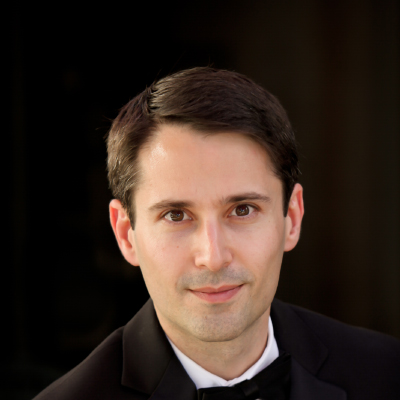
David Rentz
Conductor and Music Director
Learn More About David
David Rentz is Professor of Music at Chaffey College, where he heads the choral and vocal music programs and teaches music theory. He is also Adjunct Professor of Music at Claremont Graduate University, where he supervises masters and doctoral programs in choral and orchestral conducting, and Co-Director of Music and Fine Arts at Claremont United Church of Christ. He has taught and conducted choral ensembles at the University of Wisconsin-Madison, Yale University, and, most recently, Pomona and Scripps Colleges. He is also a founding co-conductor of C3LA (Contemporary Choral Collective of Los Angeles) and served as music director of the Orange County Symphony from 2011 to 2016.
From 2005 to 2010, he lived in New York City, where he worked as choral director at The Brearley School, a K-12 girls preparatory school on the Upper East Side of Manhattan. A busy freelancer, he was also assistant conductor of the critically-acclaimed New Amsterdam Singers and a principal conductor and founding member of C4: the Choral Composer/Conductor Collective, a collectively-run ensemble devoted to performing works written in the last twenty-five years. David’s love of early music led him to found and direct Guildsingers, a professional vocal ensemble specializing in 15th-century Franco-Flemish repertoire.
David received his B.Mus. summa cum laude from Washington University in Saint Louis, where he was a Mylonas Scholar in the Humanities, inducted into Phi Beta Kappa, and a finalist for the Rhodes Scholarship. He earned his M.M at the University of Wisconsin-Madison (Beverly Taylor), and received his M.M.A. and D.M.A. from the Yale University School of Music (Marguerite Brooks and Simon Carrington), where he was co-director of the University Chapel Choir and a member of the internationally-renowned Yale Schola Cantorum. He has received fellowships and grants from the Yale alumniVentures program and the National Endowment for the Humanities and, in 2015, was named guest professor at Xiamen University (China). In demand as an adjudicator and clinician, he has served in those capacities for the Lansum International Choral Competition, the Claremont College Orchestra Concert Orchestra Concerto Competition, the Oremor Choral Competition, the Chaffey Joint Union High School District Choral Festival, the Southern California Vocal Association, and many others.
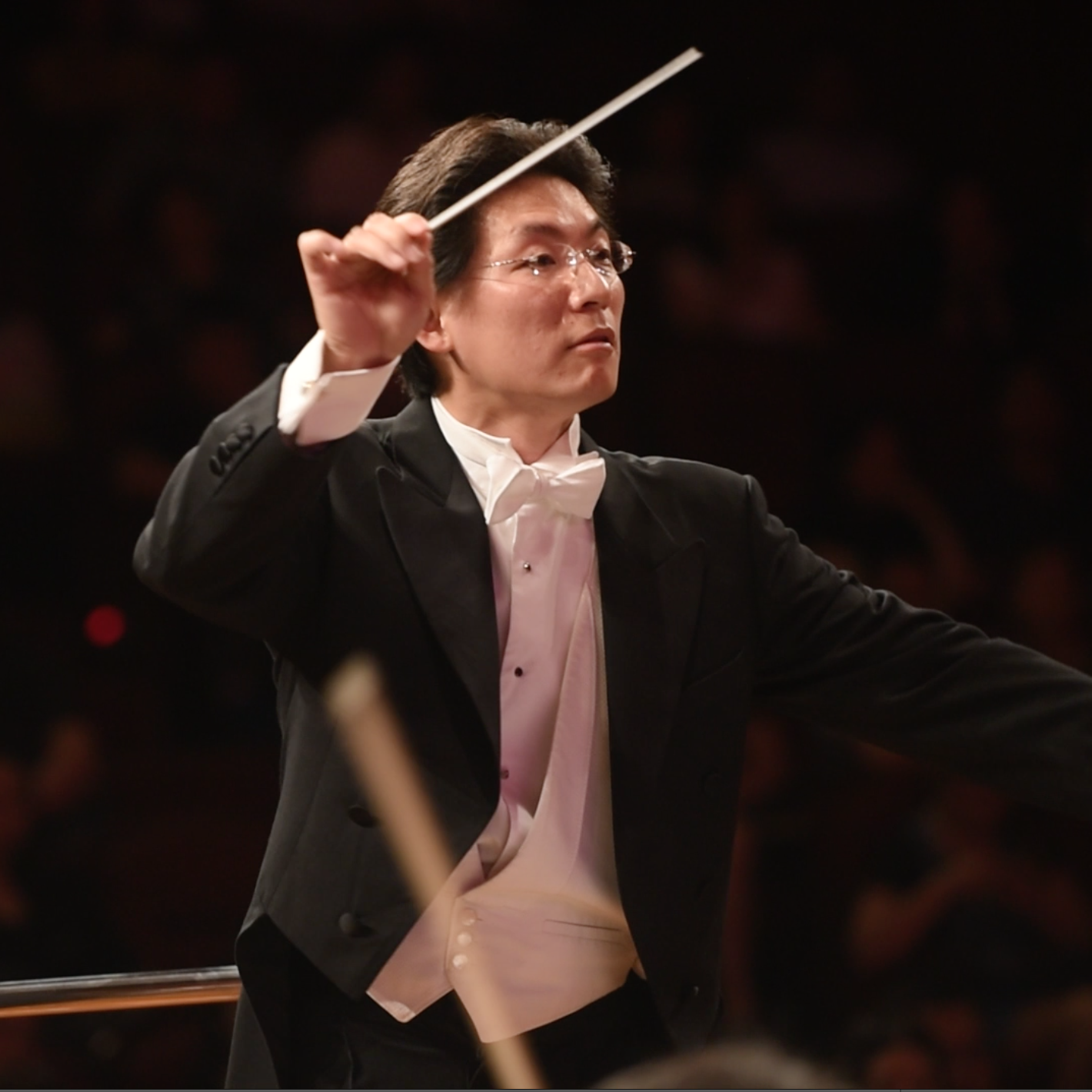
Zun Hin Woo
visiting concertmaster and guest conductor
Learn More About Hin
Zun-Hin Woo is a conductor, violinist, and educator based in Southern California. He currently serves as Associate Conductor and Concertmaster of the Temecula Valley Symphony and is Music Director and Conductor of the Temecula Valley Youth Symphony. In addition, he is Orchestra Conductor and Strings Coordinator at Fullerton College and Instrumental Department Coordinator at Santiago Canyon College.
Dr. Woo holds a Bachelor of Music degree in Violin Performance from the University of Oklahoma and a Master of Music degree in Orchestral Conducting from the University of Missouri. During his graduate studies, he served as Assistant Conductor of the Columbia Civic Orchestra and Show Me Opera, gaining experience conducting both orchestral and operatic repertoire.
As a professional violinist and violist, Dr. Woo has performed internationally with ensembles including the Hong Kong Sinfonietta and the Hong Kong Virtuosi, collaborating with orchestras across Asia and the United States. His work as a conductor spans professional, educational, and community ensembles, reflecting a strong commitment to musical excellence, mentorship, and arts education.
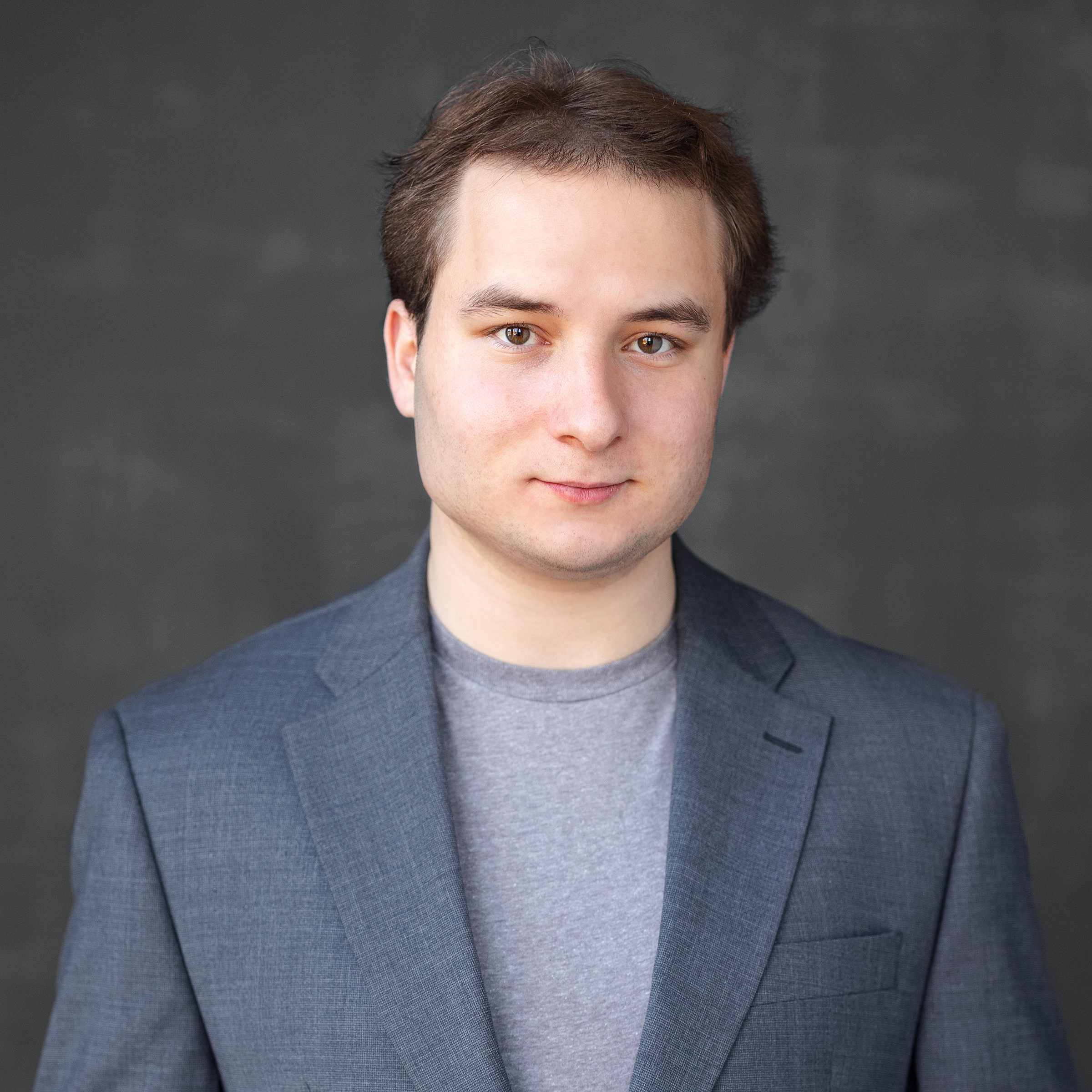
Victor Radko-Shlyakhtenko
guest conductor
Learn More About Victor
Victor Shlyakhtenko comes from a family of music lovers and began studying the piano at the age of five. Born and raised in Los Angeles, he participated in multiple local competitions as a teenager, including the Orange County Symphony’s concerto competition. This led to his concerto debut at age 12 with Dr. David Rentz and the Orange County Symphony, now the Orchestra Collective of Orange County. Victor later soloed again with the OCofOC at the age of 15.
Since then, Victor has appeared as a soloist throughout America and Europe, performing in venues such as Walt Disney Concert Hall, the JB Pritzker Pavilion, and the Leipzig Gewandhaus.
In 2017, Victor began studies in orchestral conducting with Maxim Eshkenazy at the Colburn School. In 2019, he returned to the Orchestra Collective of Orange County as an apprentice conductor, leading a performance of Shostakovich’s Cello Concerto No. 1.
From 2021 to 2025, Victor attended the Oberlin Conservatory of Music in Ohio, where he received a Bachelor of Music degree in Piano Performance under the guidance of Stanislav Ioudenitch and José Ramón Méndez. Alongside his piano studies, he has continued developing as a conductor through lessons and masterclasses with Diane Wittry, Kirk Trevor, Neil Varon, James Feddeck, and Radu Paponiu.
Victor was a recipient of the U.S. National Chopin Foundation Scholarship from 2016 to 2019 and was named a Young Scholar of the Lang Lang International Music Foundation (Class of 2018–2020). Most recently, he was awarded First Place in the 2025 Chamber Orchestra of the Springs’ Concerto Competition, as well as First Prizes in the 2023 Delta Symphony Orchestra and 2024 Panama City Symphony competitions.
This fall, Victor plans to begin his Master of Music degree in Orchestral Conducting, pursuing a parallel career path combining piano performance and conducting.
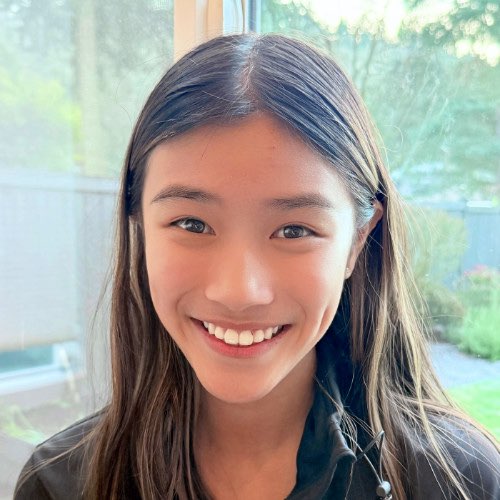
Yunfei (Joanna) Huang
piano
Learn More About Joana
Yunfei (Joanna) Huang, age 14, began her piano studies at the age of seven under the guidance of Dr. Ivona Kaminska. Through systematic and sustained study, she has developed a strong foundation in classical piano performance along with growing maturity in musical expression.
Joanna has participated in numerous competitions and festivals, earning recognition for her dedication and artistic development. Her recent honors include First Place in the American Protégé International Romantic Music Competition (2025), Gold Medalist at the Classical Viennese Festival (2025), First Place (Top 15 Most Exceptional Performer) at the Spring Music Competition (2025), and First Place in the 19th Century Music Competition (2024).
Through her musical training and stage experience, Joanna has developed a strong interest in classical repertoire, with particular attention to musical structure, stylistic clarity, and the interpretation of composers’ musical language. She approaches performance with discipline, focus, and artistic sensitivity. Outside of music, Joanna enjoys drawing, playing basketball, and writing.
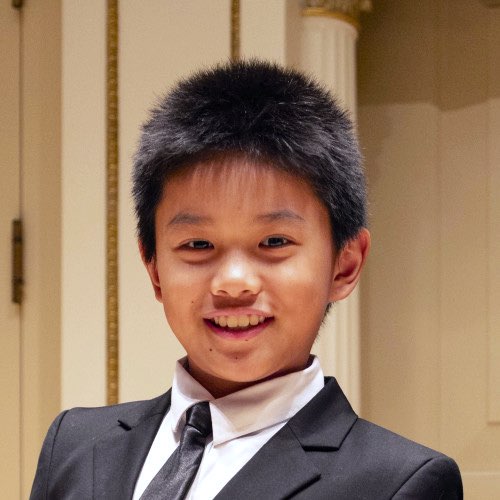
Eli Li
piano
Learn More About Eli
Eli Li is a sixth-grade pianist whose musical journey began at the age of five. He currently studies with Dr. Christopher Bowlby and has quickly distinguished himself as a young artist recognized for expressive playing and notable musical maturity.
Eli has earned top honors in numerous national and international competitions. Recent achievements include Silver Medals at the Classical Viennese Festival and the Virtuoso Artists Festival (2025). His 2024 season featured First Prizes at the Barum International Music Competition, the Crescendo International Music Competition, and the Classical Viennese Festival, as well as a Bronze Medal at the Bach Festival International. He is a three-time First Prize winner of the United States International Duo Piano Competition and earned First Prize at the Carmel Klavier International Piano Competition (Ensemble Division).
Eli performs regularly as both a soloist and a duo pianist with his partner, Siyi Xu. He has appeared at venues including Carnegie Hall and Benaroya Hall, as well as in multiple Chopin and Beyond concerts at the Polish Home Association and other venues. Outside of music, Eli enjoys debating, reading, swimming, mathematics, skiing, and hiking.
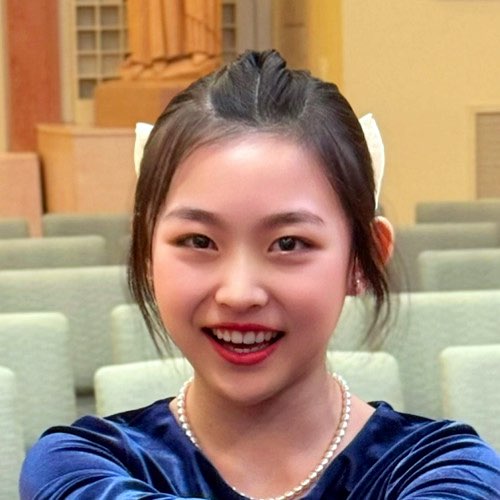
Yutong (Angela) Xie
piano
Learn More About Angela
Yutong (Angela) Xie, age 12, began studying piano at the age of six and currently studies with Dr. Ivona Kaminska. She has distinguished herself through advanced technical command, musical maturity beyond her years, and strong ensemble awareness.
Angela is a First Prize winner of the International Music Competition “Vienna” (Grand Prize Virtuoso, 2025) and a three-time First Prize winner of the American Protégé Piano and Strings Competition. She has earned Gold Medals at both the Classical Viennese Festival and the Bach Festival International, reflecting stylistic breadth across Baroque and Classical repertoire.
Since 2022, Angela has been invited to perform annually at Carnegie Hall, where she has demonstrated confident stage presence and strong collaborative musicianship in large-scale works.
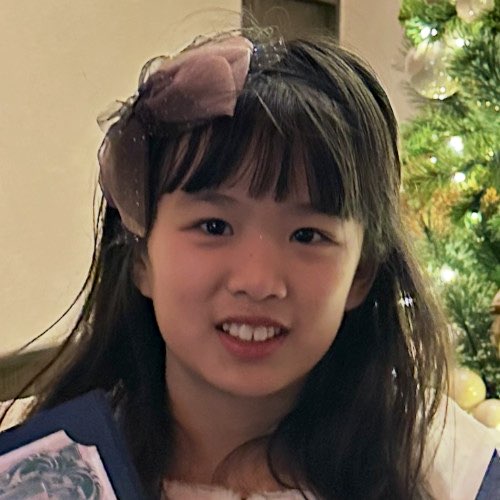
Siyi Xu
piano
Learn More About Siyi
Siyi Xu began studying piano at the age of 5 and has earned numerous awards in piano performance competitions. She is a two-time First Prize winner of the United States International Duo Piano Competition and has also won First Prizes at the Charleston Spring Music Competition, the 19th Century Music Competition, and the Summer Music Competition (Duet).
She has received Gold Medals at the Classical Viennese Festival, the Virtuoso Artists Festival, and the Bach Festival International, all organized by the Seattle International Piano Festival. Additional honors include First Prizes in the American Protégé International Romantic Music Competition and the American Protégé Music Talent Competition.
Siyi studied piano with Ms. Yunqing Zhang for four years and has been studying with Dr. Ivona Kaminska-Bowlby since October 2023. Outside of music, she is an avid reader, a devoted fan of Harry Potter, and enjoys swimming, performing arts, and dance.
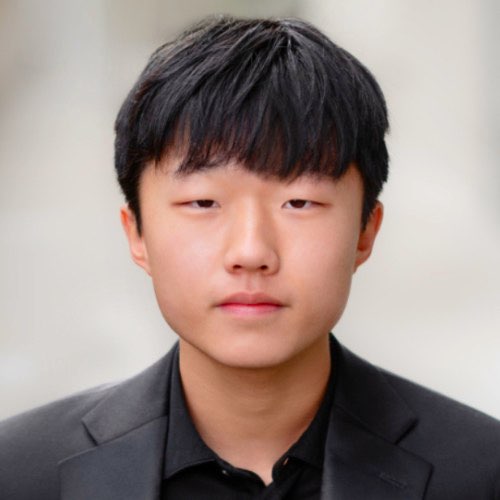
Andrew J. Lee
piano
Learn More About Andrew
Andrew J. Lee, from Sammamish, Washington, studies piano with Drs. Ivona Kaminska-Bowlby and Peter Mack and previously studied at the San Francisco Conservatory of Music. He has earned numerous First Prize awards and top honors at local, national, and international competitions.
His recent awards include First Prize at the WSMTA Outstanding Artist Piano Competition, First Prize at the San Francisco International Piano Competition, Gold Medal at the Seattle International Piano Competition Bach Festival, Grand Prix Winner of the Russian Chamber Music Foundation of Seattle Competition, and First Place at the Chopin Council of San Francisco Chopin Competition.
Andrew has performed as a soloist with the Golden State Youth Orchestra and has participated in prominent festivals including MusicAlp (France), the Southeastern Piano Festival, the Seattle Piano Institute, and the Philadelphia International Music Festival. He has worked in masterclasses with numerous distinguished artists and is also committed to community service, regularly performing at senior living facilities and coaching music theory for younger students.
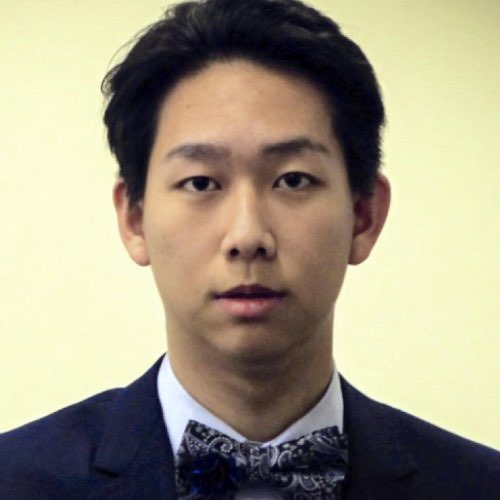
Shichu (David) Liu
piano
Learn More About David
Born in China, pianist Shichu (David) Liu began his musical journey at the age of 4. After relocating to Seattle, he continued his studies with Dr. Ivona Kaminska at the Chopin Academy of Music. David is currently a student at Berklee College of Music in Boston and remains an active member of the Chopin Academy’s Outreach Program as both a performer and mentor.
David has earned numerous competition honors, including First Prizes at the Bach Festival International, the Virtuoso Artists Festival, the Chopin Festival of the Northwest, and the Outstanding Artists Competition of Washington State. In 2018, he was selected to perform Chopin’s Piano Concerto No. 2 in F minor with the Vancouver Philharmonic Orchestra at the Chan Centre. His performance credits also include appearances at Benaroya Hall and Weill Recital Hall.
In addition to his performance career, David is deeply committed to music education and outreach, serving as a practice instructor and mentor for younger pianists while continuing his own artistic development.
Meet the Collective
David Rentz, Music Director
FIRST VIOLINS
Zun-Hin Woo, Concertmaster
Debbie Gagnon, Associate Concertmaster
Shirley Chang
Karyn Haitz
Stephanie Kim
Donna Cho
SECOND VIOLINS
Doris Chiang
Benjamin Wilson
Kinh Dang
Stefanie McAfee,
Endowed Chair
VIOLAS
Ellen B. Rice Memorial Chair
Colby Miyamoto
Ty Kanauchi
Niño Escolar-Chua
Arturo Mandujano
Hao-Nhien Vu
CELLOS
Ryan Phipps, Principal
Suzanne La Roque
Dzung Nguyen
John Rasmussen
Miles Wilderman
CONTRABASSES
Corbin Foster, Principal
Les Woodson
FLUTES
Stephanie Getz, Principal
Deborah Vasquez
OBOES
Angela Wells, principal
Ann M. Robinson Endowed Chair
Rafael Tapia Jr, principal
CLARINETS
Leslie Schroerlucke, principal
Ellen B. Rice Memorial Chair
Karen Zelazo
BASSOONS
Julianne Fung, principal
Lesley Frey
HORNS
Brian Pham, principal
Ann M. Robinson Endowed Chair
Sarah Krueger
TRUMPETS
Andrew Rodman, principal
Jonathan Kang
TIMPANI
Bob Forte, principal
Program Notes
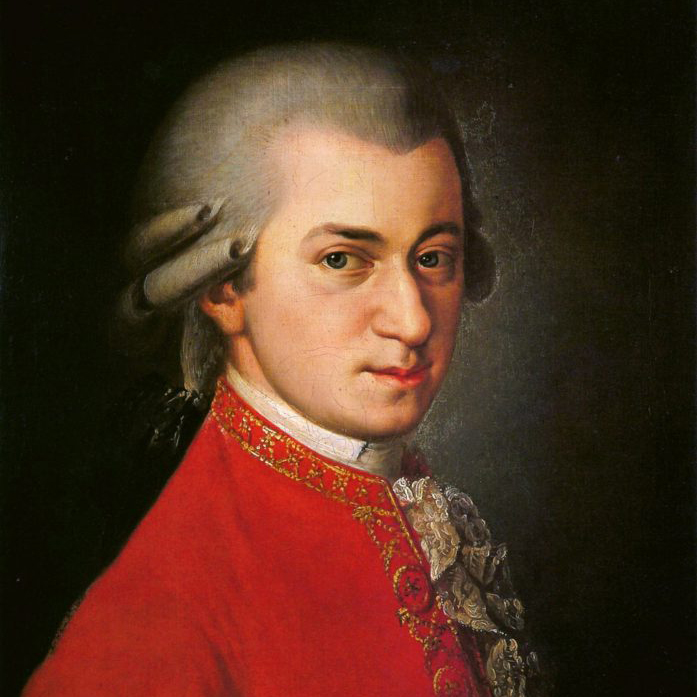
Wolfgang Amadeus Mozart
-
Born: January 27, 1756 – Salzburg, Austria
-
Died: December 5, 1791 – Vienna, Austria (age 35)
Piano Concerto No. 13 in C major, K. 415
I. Allegro
Written for Vienna’s public concert life, this concerto shows Mozart balancing elegance, virtuosity, and accessibility in equal measure.
Read More
Why this piece exists
Mozart composed this concerto shortly after settling in Vienna, where he was supporting himself through teaching, publishing, and public performances. K. 415 was designed to appeal to a broad audience and could even be performed with reduced forces, making it practical as well as polished.
What to listen for
The first movement is bright and confident, with clear themes passed between orchestra and soloist. Rather than dramatic confrontation, the piano and orchestra engage in conversation, each taking turns shaping the musical narrative.
The human angle
At this point in his life, Mozart was entrepreneurial as well as artistic. This concerto reflects his ability to write music that was refined without being remote, and virtuosic without being intimidating.
Why it still resonates
Its appeal lies in balance. The music is clever, graceful, and immediately intelligible — qualities that make it as enjoyable today as it was for Mozart’s original audiences.
COMPOSED
1868 (in just 17 days)
FIRST PERFORMANCE
March 23, 1783 — Burgtheater, Vienna; Mozart, piano (benefit concert).
APPROX LENGTH
~6 minutes
INSTRUMENTATION
Solo piano; 2 oboes, 2 horns, strings
Wolfgang Amadeus Mozart
-
Born: January 27, 1756 – Salzburg, Austria
-
Died: December 5, 1791 – Vienna, Austria (age 35)
Piano Concerto No. 11 in F major, K. 413
I. Allegro
Gentle and unpretentious, this concerto favors warmth and clarity over spectacle.
Read More
Why this piece exists
K. 413 was written alongside two other early Vienna concertos and reflects Mozart’s interest in flexibility and practicality. He explicitly noted that it could be performed either with full orchestra or with string quartet, widening its usefulness in different settings.
What to listen for
The first movement unfolds with calm assurance. The piano writing is transparent rather than flashy, and the orchestra provides a supportive, chamber-like backdrop rather than dramatic opposition.
The human angle
This concerto reveals Mozart’s confidence in simplicity. Rather than pushing boundaries, he refines them, trusting proportion and clarity to carry the music.
Why it still resonates
Its modesty is part of its strength. The music invites close listening and rewards attention to detail, making it quietly satisfying rather than overtly dramatic.
COMPOSED
1782
FIRST PERFORMANCE
Early 1783 — Vienna (subscription concert season); likely Mozart, piano.
APPROX LENGTH
~9 minutes
INSTRUMENTATION
Solo piano; 2 oboes, 2 horns, strings
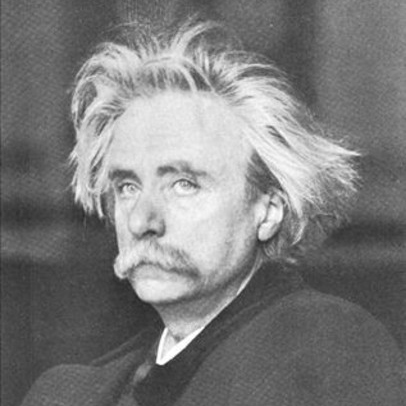
Edvard Grieg
-
Born: June 15, 1843 – Bergen, Norway
-
Died: September 4, 1907 – Bergen, Norway (age 64)
Piano Concerto in A minor, Op. 16
I. Allegro molto moderato
Composed by a 25-year-old Grieg eager to announce himself, this concerto blends Romantic virtuosity with the sounds and landscapes of Norway.
Read More
Why this piece exists
Grieg wrote his Piano Concerto while on a creative retreat in Denmark, at a moment when he was searching for a personal musical voice. Although the concerto follows the traditional Romantic concerto model, it was also Grieg’s first major orchestral work and a bold attempt to step onto the international stage.
What to listen for
The opening movement begins with one of the most recognizable gestures in the concerto repertoire: a dramatic orchestral statement followed by the piano’s sweeping entrance. Throughout the movement, listen for sharp rhythmic contrasts, bold piano writing, and frequent dialogue between soloist and orchestra rather than pure accompaniment.
The human angle
Grieg was deeply concerned with national identity, and although this concerto does not quote folk songs directly, its rhythms, harmonies, and melodic shapes reflect the music of Norway. The result is a work that feels both cosmopolitan and personal, rooted in place without being programmatic.
Why it still resonates
Grieg’s concerto succeeds because it balances immediacy with depth. It is emotionally direct and highly dramatic, yet carefully crafted — a piece that speaks just as clearly to first-time listeners as it does to seasoned concertgoers.
COMPOSED
1868
FIRST PERFORMANCE
April 3, 1869 — Casino Concert Hall / Grand Casino Hall, Copenhagen; Edmund Neupert, piano; Holger Simon Paulli, conductor (Royal Theatre orchestra / professional players).
APPROX LENGTH
~13 minutes
INSTRUMENTATION
Solo piano; 2 flutes, 2 oboes, 2 clarinets, 2 bassoons, 4 horns, 2 trumpets, 3 trombones, timpani, strings
Wolfgang Amadeus Mozart
-
Born: January 27, 1756 – Salzburg, Austria
-
Died: December 5, 1791 – Vienna, Austria (age 35)
Piano Concerto No. 17 in G major, K. 453
I. Allegro
Playful, inventive, and full of character, this concerto reflects Mozart at ease with both form and imagination.
Read More
Why this piece exists
Mozart composed this concerto for one of his pupils, Barbara Ployer, and it reflects a pedagogical clarity alongside compositional sophistication. By 1784, Mozart was at the height of his popularity in Vienna and writing with confidence and freedom.
What to listen for
The first movement is rich in thematic variety and sudden turns of mood. Listen for unexpected harmonic shifts and the piano’s ability to sound both lyrical and mischievous within a tightly organized structure.
The human angle
This concerto shows Mozart enjoying himself. There is wit in the dialogue between soloist and orchestra, and a sense of delight in musical surprise.
Why it still resonates
Its charm is inseparable from its craft. Beneath the lightness lies careful construction, making it engaging on both a surface and structural level.
COMPOSED
1784
FIRST PERFORMANCE
June 13, 1784 — private concert in Döbling (near Vienna); Barbara Ployer, piano.
APPROX LENGTH
~11 minutes
INSTRUMENTATION
Solo piano; flute, 2 oboes, 2 bassoons,
2 horns, 2 trumpets, timpani, strings
Wolfgang Amadeus Mozart
-
Born: January 27, 1756 – Salzburg, Austria
-
Died: December 5, 1791 – Vienna, Austria (age 35)
Piano Concerto No. 24 in C minor, K. 491
I. Allegro
Dark, urgent, and unusually dramatic, this concerto stands apart from Mozart’s more public-facing works.
Read More
Why this piece exists
Composed during a period of intense productivity, K. 491 is one of only two piano concertos Mozart wrote in a minor key. It expands the orchestra and deepens the expressive range far beyond his earlier concertos.
What to listen for
The first movement is driven by tension rather than brilliance. The piano does not dominate but wrestles with the orchestra, creating a sense of struggle and seriousness uncommon in Mozart’s concerto output.
The human angle
Here, Mozart sets aside elegance in favor of intensity. The music suggests a composer willing to explore darker emotional territory, even within a public concert form.
Why it still resonates
Its power lies in restraint and complexity. Rather than offering easy resolution, the music sustains a sense of urgency that feels strikingly modern.
COMPOSED
1786
FIRST PERFORMANCE
April 1786 — Burgtheater, Vienna; Mozart, piano, directing from the keyboard (sources differ on April 3 vs April 7).
APPROX LENGTH
~14 minutes
INSTRUMENTATION
Solo piano; flute, 2 oboes, 2 clarinets, 2 bassoons, 2 horns, 2 trumpets, timpani, strings
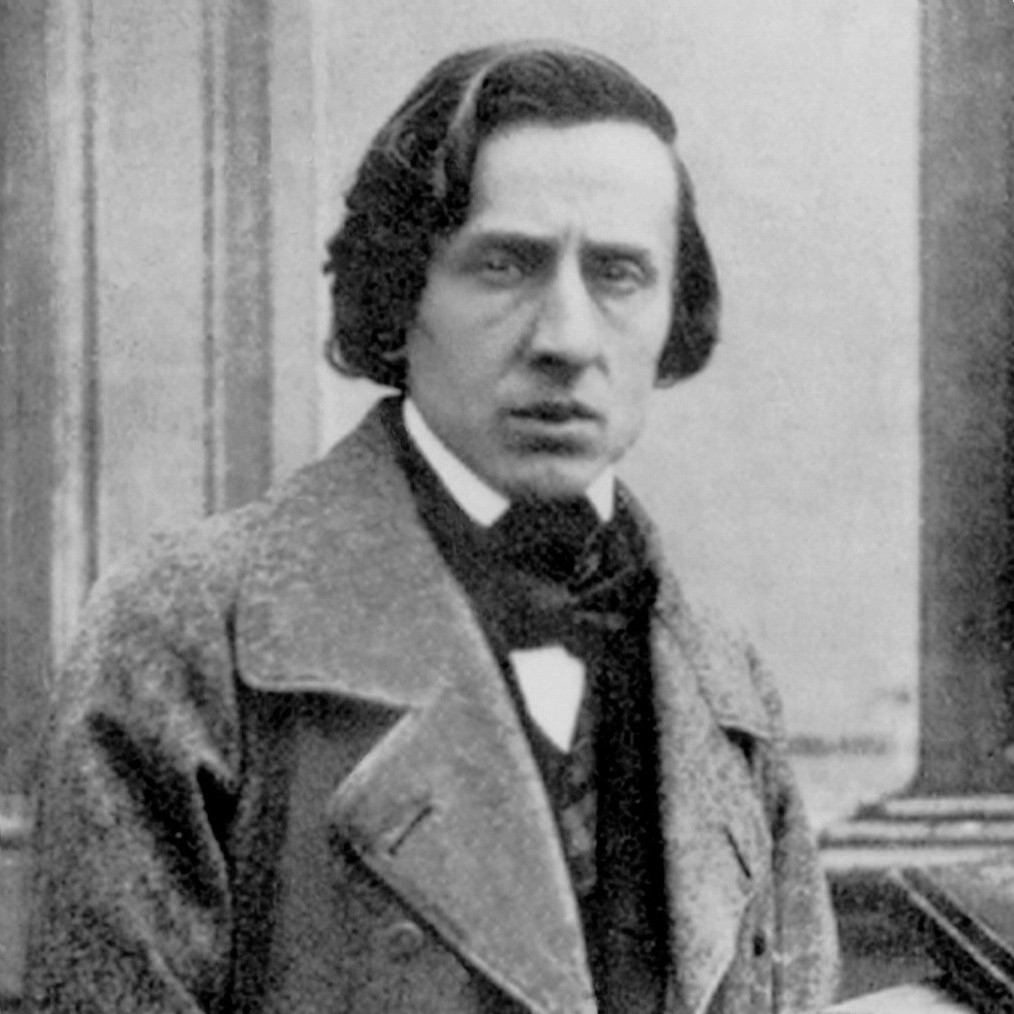
Frédéric Chopin
-
Born: March 1, 1810 – Żelazowa Wola, Poland
-
Died: October 17, 1849 – Paris, France (age 39)
Piano Concerto No. 2 in F minor, Op. 21
I. Maestoso
Written as Chopin was stepping onto the public stage for the first time, this concerto is less about the orchestra and more about the piano as a singing voice.
Read More
Why this piece exists
Chopin composed this concerto in his late teens while preparing to leave Poland and establish himself as a virtuoso pianist. Like many piano concertos of the period, it was written primarily as a vehicle for the soloist, designed to showcase tone, elegance, and expressive nuance rather than orchestral drama.
What to listen for
In the first movement, the orchestra sets the scene, but the focus quickly shifts to the piano. Listen for long, lyrical lines, delicate ornamentation, and a sense of rubato-like flexibility — the piano often feels as if it is speaking freely, even when tightly structured.
The human angle
Although labeled “No. 2,” this concerto was actually completed before Chopin’s First Piano Concerto. At the time, Chopin was deeply influenced by Italian opera and the bel canto tradition, and his writing here treats the piano less as a percussive instrument and more as a singer.
Why it still resonates
Rather than aiming for power or grandeur, this music invites close listening. Its emotional impact comes from intimacy, restraint, and expressive detail — qualities that continue to define Chopin’s voice and make his music enduring.
COMPOSED
1829–1830
FIRST PERFORMANCE
March 17, 1830 — National Theatre, Warsaw; Chopin, piano; Karol Kurpiński, conductor.
APPROX LENGTH
~14 minutes
INSTRUMENTATION
Solo piano; 2 flutes, 2 oboes, 2 clarinets, 2 bassoons, 2 horns, 2 trumpets, timpani, strings